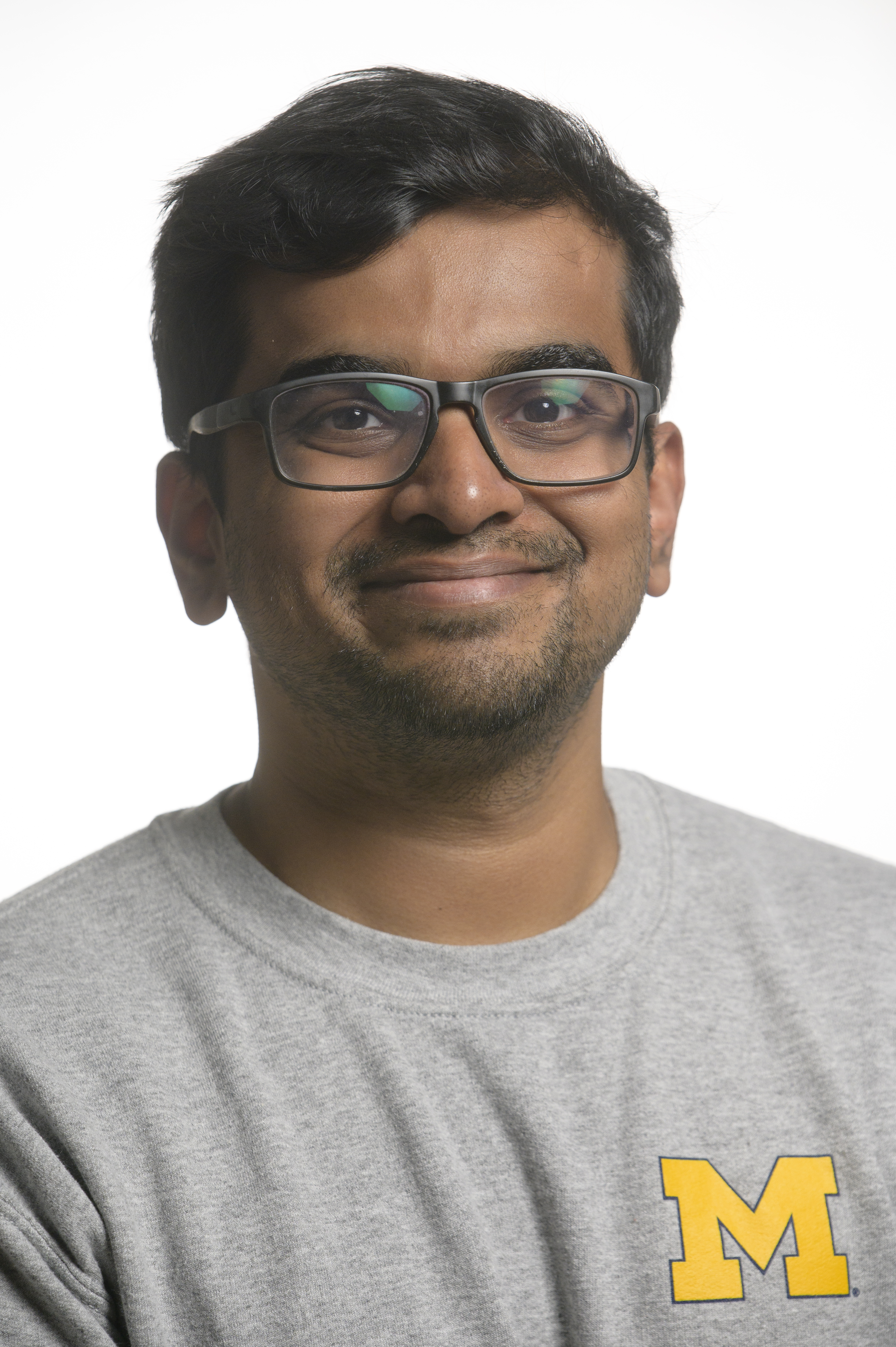
Anmol Panda
Ph.D. Candidate, University of Michighan School of Information
anmolp [AT] umich.edu
Bio
I am a Ph.D. Candidate in Information Science at the University of Michigan. My research examines how digital media—including social platforms, news ecosystems, and generative AI technologies—shape political attitudes, racialized discourse, and civic engagement.
I develop computational methods for analyzing large-scale social data, integrating machine learning, NLP, causal inference, and data engineering. My work focuses on media effects, race and ethnic politics, and the design of more equitable information systems.
My research has been published in PNAS Nexus, Scientific Data, and Economic & Political Weekly (EPW). I am advised by Libby Hemphill.
Publications
See all publications on
Google Scholar.
‡ indicates equal contribution.
Motivational & gendered framing in networked publics on Indian social media: A case study of #HindusUnderAttack
A. Panda, Z. Akbar, J. Mendelsohn, C. Budak, and M. Bui
Under Review, Proceedings of the International AAAI Conference on Web and Social Media
Modalities of political engagement on social media and voting for Donald Trump: Capturing heterogeneity by race over time
A. Panda and L. Hemphill
In Submission, Proceedings of the National Academy of Sciences (PNAS)
The relationship of social media and news media diet with attitudes of Asian Americans toward policing and immigration
A. Panda and L. Hemphill
Under Revision
How digital paywalls shape news coverage
P. S. Dhillon, A. Panda, and L. Hemphill
PNAS Nexus, 4(1)
Comparative sensitivity of social media data and their acceptable use in research
L. Hemphill, A. Schöpke-Gonzalez, and A. Panda
Scientific Data, 9(1)
Twitter in the 2019 Indian general elections: Trends of use across states and parties
J. Pal and A. Panda
Economic and Political Weekly, 54(51)
Misinformation as a window into prejudice: COVID-19 and the information environment in India
S. Z. Akbar, A. Panda, D. Kukreti, A. Meena, and J. Pal
CSCW 2021, ACM
From greetings to corruption: Politicians, political parties, and tweeting in India
L. Bozarth, A. Panda, C. Budak, and J. Pal
ICTD 2020
Affording extremes: Incivility, social media, and democracy in the Indian context
A. Panda, S. Chakraborty, N. Raval, H. Zhang, M. Mohapatra, S. Z. Akbar, and J. Pal
ICTD 2020
NivaDuck: A scalable pipeline to build a database of political Twitter handles for India and the United States
A. Panda, A. Gonawela, S. Acharyya, D. Mishra, M. Mohapatra, R. Chandrasekaran, and J. Pal
Social Media & Society 2020
Topical focus of political campaigns and its impact: Findings from politicians’ hashtag use during the 2019 Indian elections
A. Panda, R. Kommiya Mothilal, M. Choudhury, K. Bali, and J. Pal
CSCW 2020
Motivational & gendered framing in networked publics on Indian social media: A case study of #HindusUnderAttack
A. Panda, Z. Akbar, J. Mendelsohn, C. Budak, and M. Bui
Under Review, Proceedings of the International AAAI Conference on Web and Social Media
Modalities of political engagement on social media and voting for Donald Trump: Capturing heterogeneity by race over time
A. Panda and L. Hemphill
In Submission, Proceedings of the National Academy of Sciences (PNAS)
The relationship of social media and news media diet with attitudes of Asian Americans toward policing and immigration
A. Panda and L. Hemphill
Under Revision
How digital paywalls shape news coverage
P. S. Dhillon, A. Panda, and L. Hemphill
PNAS Nexus, 4(1)
Comparative sensitivity of social media data and their acceptable use in research
L. Hemphill, A. Schöpke-Gonzalez, and A. Panda
Scientific Data, 9(1)
Twitter in the 2019 Indian general elections: Trends of use across states and parties
J. Pal and A. Panda
Economic and Political Weekly, 54(51)
Misinformation as a window into prejudice: COVID-19 and the information environment in India
S. Z. Akbar, A. Panda, D. Kukreti, A. Meena, and J. Pal
CSCW 2021, ACM
From greetings to corruption: Politicians, political parties, and tweeting in India
L. Bozarth, A. Panda, C. Budak, and J. Pal
ICTD 2020
Affording extremes: Incivility, social media, and democracy in the Indian context
A. Panda, S. Chakraborty, N. Raval, H. Zhang, M. Mohapatra, S. Z. Akbar, and J. Pal
ICTD 2020
NivaDuck: A scalable pipeline to build a database of political Twitter handles for India and the United States
A. Panda, A. Gonawela, S. Acharyya, D. Mishra, M. Mohapatra, R. Chandrasekaran, and J. Pal
Social Media & Society 2020
Topical focus of political campaigns and its impact: Findings from politicians’ hashtag use during the 2019 Indian elections
A. Panda, R. Kommiya Mothilal, M. Choudhury, K. Bali, and J. Pal
CSCW 2020
Devotees on an astroturf: Media, politics, and outrage in the suicide of a popular filmstar
S. Z. Akbar, A. Sharma, D. Mishra, R. K. Mothilal, H. Negi, S. Nishal, A. Panda, and J. Pal
ACM COMPASS / SIGCAS 2022
Dismiss: Database of Indian social media influencers on Twitter
A. Arya, S. De, D. Mishra, G. Shekhawat, A. Sharma, A. Panda, F. Lalani, P. Singh, R. K. Mothilal, R. Grover, et al.
ICWSM 2022
Note: Picking sides—The influencer-driven #hijabban discourse on Twitter
S. De, A. Panda, and J. Pal
ACM COMPASS / SIGCAS 2022
COVID, BLM, and the polarization of US politicians on Twitter
A. Panda, D. Siddarth, and J. Pal
arXiv preprint arXiv:2008.03263
Leader or party? Personalization in Twitter political campaigns during the 2019 Indian elections
A. Rajadesingan, A. Panda, and J. Pal
Social Media & Society 2020
ConfLLVM: A compiler for enforcing data confidentiality in low-level code
A. Brahmakshatriya, P. Kedia, D. P. McKee, D. Garg, A. Lal, A. Rastogi, H. Nemati, A. Panda, and P. Bhatu
EuroSys 2019
A comparative study of GPUVerify and GKLEE
A. Panda, P. Rümmer, and N. Goveas
PDGC 2016
Political hazard: Misinformation in the 2019 Indian general election campaign
S. Z. Akbar, A. Panda, and J. Pal
In *Political Campaigning in Digital India*, Routledge
Vitæ
Full CV available as PDF .
-
ICPSR Summer Program 2023 – 2025Teaching Assistant
Supported courses in Data Science and Text Analysis,
Data Visualization, Bayesian Models, and Network Science -
The World Bank 2022Consultant, Water and Firms Team
Analyzed Enterprise Surveys data across
150+ countries using Python and Stata -
University of Michigan 2021 – 2024Graduate Student Instructor
Taught Data Mining, Deep Learning, and Python Programming
at the School of Information -
University of Michigan 2020–PresentPh.D., Information Science (ABD)
Advisor: Libby Hemphill; Committee: Joyojeet Pal, Matthew Bui, Ted Brader -
Microsoft Research India 2018 – 2020Research Fellow
Built datasets of political actors,
studied elections, extreme speech, and political communication -
Indian Institute of Technology, Delhi 2016 – 2018Senior Project Assistant
Developed compiler optimizations for packet processing pipelines with substantial throughput gains -
Uppsala University 2015 – 2016Exchange Studies
Coursework in Combinatorial Optimization,
Graph Theory, and HCI -
University of Northern British Columbia 2015Mitacs Globalink Research Intern
Developed GPS-free localization
algorithms for autonomous farm-seeding robots -
Center for Technical Education 2014 – 2015Instructor
Taught full-semester courses on Object-Oriented Programming and C# at BITS Pilani -
BITS Pilani, Goa 2012 – 2016B.E. (Hons.), Computer Science
Undergraduate Thesis: A comparative study of GPUVerify and GKLEE